Table of Contents
- Introduction
- UNIT 1 DIETARY TRENDS AND NUTRITION
- UNIT 2 FOOD CHOICES: MISINFORMATION
- UNIT 3 FOOD CHOICES: ECONOMICS
- UNIT 4 FOOD CHOICES: FOODBORNE ILLNESSES
- UNIT 5 GENETICALLY ENGINEERED FOOD
- UNIT 6 THE ORGANIC FOOD MOVEMENT
- UNIT 7 GLOBAL FOOD MARKETS
- UNIT 8 CONTEMPORARY WEIGHT LOSS PROGRAMS
- UNIT 9 DIVERSITY OF FOOD CHOICES
- Puerto Rican Mofongo
Introduction
This assignment focuses on creating a clear, accessible introduction that explains the purpose of the webpage and the material it contains. The goal is to provide readers with a brief overview of the project, outline what the content will cover, and establish the context for the information presented. This section serves as a guide for the audience, helping them understand what the assignment is about and what they can expect as they move through the webpage.
UNIT 1 DIETARY TRENDS AND NUTRITION
Information to Remember
Resource
nU.S. Department of Health and Human Services. (2026). USDA Dietary Guidelines for Americans 2025-2030. Health.gov.
The USDA Dietary Guidelines for Americans 2025–2030 website is an essential resource for both consumers and nutrition professionals. It provides accessible summaries, scientific reports, and practical tools that translate research into everyday recommendations. The site also includes resources tailored to different life stages, making it useful for personalized nutrition planning. This resource supports informed decision making and helps practitioners stay current with national nutrition standards (U.S. Department of Health and Human Services, 2026).
Unit 2 Food Choices: Misinformation
Information to Remember
A key learning point from Unit 2 is how misinformation shapes food choices and contributes to confusion among consumers. Nutrition misinformation often spreads through social media, marketing, and unqualified influencers, making it difficult for individuals to distinguish credible guidance from misleading claims. Understanding the psychological and sociological factors behind why people believe misinformation helps practitioners address these barriers more effectively. This knowledge reinforces the need for clear, evidence based communication in nutrition counseling (Hermann, 2017).
One key learning point from Unit 1 is the importance of the Dietary Guidelines for Americans as the foundation for evidence based nutrition practice. These guidelines provide updated recommendations every five years to help individuals make healthier food and beverage choices across the lifespan. They emphasize nutrient dense foods, balanced eating patterns, and limiting added sugars, saturated fats, and sodium. For practitioners, these guidelines serve as a critical tool for counseling clients and supporting population level health initiatives (U.S. Department of Health and Human Services, 2026).
Resource
Hermann, J. (2017). Nutrition misinformation. Oklahoma State University Extension. https://extension.okstate.edu/fact-sheets/nutrition-misinformation.html
Unit 3 Food Choices: Economics
Information to Remember
Unit 3 highlights how economic factors influence where and how people shop for food. Understanding the differences between grocery stores, supermarkets, and hypermarkets helps explain variations in pricing, product availability, and consumer behavior. Economic access plays a major role in shaping dietary patterns, especially for families with limited budgets. For practitioners, recognizing these economic constraints is essential for offering realistic, culturally sensitive nutrition recommendations (Quain, 2018).
Resource
Quain, S. (2018, November 26). The difference between grocery, supermarket, & hypermarket merchandisers. Small Business Chronicle. smallbusiness.chron.com/difference-between-grocery-supermarket-hypermarket-merchandisers-75675.html
Quain’s (2018) article on grocery, supermarket, and hypermarket merchandisers provides a clear explanation of how different retail environments operate. It describes how store size, product variety, and marketing strategies influence consumer purchasing decisions. This resource is useful for understanding the economic landscape that shapes food access in various communities. It also helps practitioners tailor recommendations based on where clients realistically shop.
Unit 4 Food Choices: Foodborne Illnesses
Information to Remember
A key learning point from Unit 4 is the significant public health burden caused by foodborne illnesses in the United States. The CDC estimates that millions of Americans become sick each year due to contaminated food, highlighting the importance of safe food handling practices. Understanding common pathogens and their sources helps practitioners educate clients on prevention strategies. This knowledge is essential for reducing risk and promoting food safety at home and in food service settings (CDC, 2016).
Hermann’s (2017) Nutrition Misinformation fact sheet is a valuable resource that explains how false nutrition claims spread and why they are so persuasive. It outlines common red flags, such as miracle cures or fear based messaging, and provides strategies for evaluating credibility. This resource is especially helpful for practitioners who need to educate clients about identifying reliable information. It also supports consumer empowerment by promoting critical thinking about nutrition claims.
Resource
Resource
Kukreja, R. (n.d.). What is genetic engineering? https://www.conserve-energy-future.com/what-is-genetic-engineering.php
Kukreja’s (n.d.) article What Is Genetic Engineering? offers a clear overview of how genetic modification works and its applications in agriculture. It explains the potential benefits, such as improved crop resilience, as well as concerns related to biodiversity and long term safety. This resource is helpful for consumers seeking to understand GE foods beyond media headlines. It also supports practitioners in addressing client questions with accurate scientific information.
Unit 5 Genetically Engineered Food
Information to Remember
Unit 5 emphasizes the science behind genetic engineering and its role in modern food production. Genetic engineering allows for the modification of organisms to enhance traits such as pest resistance, nutrient content, or crop yield. While GE foods are widely used, they also raise questions about safety, environmental impact, and consumer acceptance. Understanding these issues helps practitioners provide balanced, evidence based guidance to clients (Kukreja, n.d.).
Centers for Disease Control and Prevention. (2016). Estimates of foodborne illness in the United States.
The CDC’s Estimates of Foodborne Illness webpage provides comprehensive data on the causes and impacts of foodborne disease. It includes information on pathogen attribution, outbreak trends, and high risk foods. This resource is valuable for practitioners who need accurate, up to date information to support food safety education. It also helps consumers understand how everyday behaviors can reduce their risk of illness (CDC, 2016).
Resource
Mayo Clinic. (2020). Organic foods: Are they safer? More nutritious? https://www.mayoclinic.org/healthy-lifestyle/nutrition-and-healthy-eating/in-depth/organic-food/art-20043880
The Mayo Clinic’s article Organic Foods: Are They Safer? More Nutritious? provides an evidence based comparison of organic and conventional foods. It explains labeling standards, potential benefits, and common misconceptions. This resource is valuable for helping consumers navigate marketing claims and make choices aligned with their values and budgets. Practitioners can use it to clarify misunderstandings and promote balanced decision making (Mayo Clinic, 2020).
Unit 6 The Organic Food Movement
Information to Remember
A key learning point from Unit 6 is the distinction between organic and conventional foods, particularly regarding production methods and perceived health benefits. Organic foods are grown without synthetic pesticides or fertilizers, but research shows mixed results on whether they are more nutritious. Many consumers choose organic products due to environmental or ethical concerns rather than nutritional differences. Understanding these motivations helps practitioners support informed, individualized food choices (Mayo Clinic, 2020).
Unit 7 Global Food Markets
Information to Remember
Unit 7 explores how globalization has transformed food systems and influenced dietary patterns worldwide. Fast food chains and processed foods have spread across borders, contributing to rising rates of obesity and chronic disease. Schlosser’s work highlights how American fast food culture has shaped global eating habits and weakened traditional food practices. Understanding these trends helps practitioners address the health impacts of globalized food environments (Schlosser, 2001).
Resource
Eric Schlosser. (2001). Fast food nation: The dark side of the all-American meal: Chapter 10: Globalization. Mariner Books.
Chapter 10 of Fast Food Nation provides a detailed examination of how fast food corporations expanded internationally and reshaped global food markets. Schlosser describes the cultural, economic, and health consequences of this expansion. This resource is essential for understanding the intersection of globalization, consumer behavior, and public health. It also encourages practitioners to consider how global food systems influence local dietary choices (Schlosser, 2001).
Unit 8 Contemporary Weight Loss Programs
Information to Remember
Unit 8 emphasizes the importance of evaluating commercial weight loss programs based on scientific evidence rather than marketing claims. Many programs promise rapid results but lack long term effectiveness or behavioral support. Gudzune et al. (2015) found that only a few commercial programs demonstrate sustained weight loss outcomes. This reinforces the need for practitioners to guide clients toward safe, evidence based approaches that prioritize lifestyle change.
Resource
Gudzune, K. A., Doshi, R. S., Mehta, A. K., Chaudhry, Z. W., Jacobs, D. K., Vakil, R. M., & … Clark, J. M. (2015). Efficacy of commercial weight-loss programs: An updated systematic review. Annals of Internal Medicine, 162(7), 501–512. https://doi.org/10.7326/M14-2238
The systematic review by Gudzune et al. (2015) is a valuable resource for understanding the effectiveness of commercial weight loss programs. It compares multiple programs and identifies which ones have credible evidence supporting long term success. This resource helps practitioners make informed recommendations and caution clients about programs with limited scientific backing. It also highlights the importance of behavioral support in achieving lasting weight loss.
Unit 9 Diversity of Food Choices
Information to Remember
Unit 9 highlights how race, ethnicity, and cultural identity shape food patterns and nutritional needs. Wallach (2013) explains how historical narratives and racial thinking have influenced perceptions of different cultural foods in the United States. Understanding these dynamics helps practitioners provide culturally competent nutrition guidance that respects heritage and promotes health. This knowledge is essential for supporting diverse populations in maintaining both cultural identity and well being.
Resource
Wallach, J. J. (2013). How America eats: A social history of U.S. food and culture.
Wallach’s (2013) How America Eats offers a historical perspective on how cultural diversity has shaped American food habits. Chapter 7 examines how racialized thinking influenced food stereotypes and acceptance of cultural cuisines. This resource helps practitioners understand the social context behind food choices and the importance of cultural sensitivity. It also reinforces the value of preserving traditional foods while promoting health.
Puerto Rican Mofongo
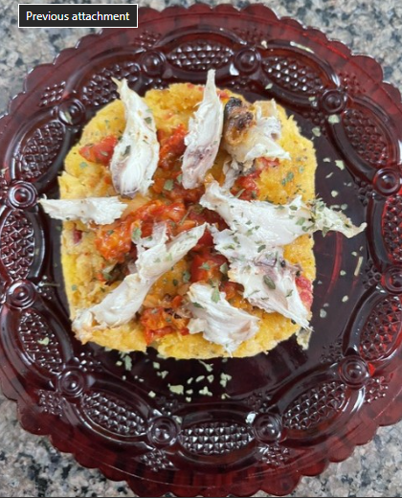
Puerto Rican food culture reflects a blend of Taíno, African, and Spanish influences, and mofongo is one of the island’s most iconic dishes. Traditionally made from fried green plantains mashed with garlic, olive oil, and chicharrón, mofongo represents the fusion of Indigenous ingredients with African cooking techniques such as frying and mashing in a wooden pilón.
Puerto Rican cuisine emphasizes bold flavors, communal meals, and the use of staple ingredients like plantains, sofrito, rice, beans, and pork. Understanding this food culture helps practitioners appreciate how heritage foods support identity, family traditions, and cultural continuity (Lush, 2022).
Preparing mofongo gave me a deeper appreciation for the labor and technique behind this dish. Frying the plantains required patience and mashing them while they were still hot was more challenging than expected. Balancing the garlic and salt took a few adjustments, but the final texture—dense, savory, and comforting—made the effort worthwhile.
I chose mofongo because it is central to Puerto Rican cuisine and represents the island’s cultural history. This experience helped me understand how traditional foods carry emotional and cultural significance, and I would definitely make the dish again with added variations like shrimp.
References:
Lush, E. (2022). UNESCO food culture: 25 amazing culinary traditions around the world. https://wander-lush.org/food-culture-unesco/
Recipe Link:
https://www.foodfidelity.com/mofongo-relleno/
 Balanced Roots Wellness
Leave a comment