Unit 7 · Wellness Education Course
National Institutes of Health (NIH) – NCCIH: Mind‑Body Approaches for Stress
This peer-reviewed NIH resource reviews evidence for mind-body stress-management practices such as meditation, yoga, tai chi, and guided imagery. It highlights which approaches have strong research support and which are still emerging. This site is ideal for selecting CIM-aligned techniques that are safe, accessible, and backed by clinical studies.
What Are Mind–Body Approaches?
Mind–body approaches are practices that intentionally engage the connection between our mental and physical states to support health and resilience. Rather than treating stress as a purely psychological or purely physical problem, they work with the whole person—breath, posture, attention, and emotion together. This integrated view sits at the heart of grounded, whole-person wellness.
The National Center for Complementary and Integrative Health (NCCIH) is the federal agency within the NIH responsible for rigorously studying complementary and integrative approaches. Its role is to separate what genuinely helps from what is merely popular—reviewing clinical trials, funding research, and translating findings into clear, accessible guidance the public and practitioners can trust.
Stress matters here because it rarely stays contained. Chronic stress ripples across sleep, digestion, mood, immune function, and relationships. Mind–body practices offer people practical, low-cost tools to interrupt that cycle—calming the nervous system and rebuilding a sense of steadiness they can carry into daily life.
Practices with Strong Research Support
Several mind–body practices have accumulated a substantial body of clinical evidence for stress reduction. NCCIH’s reviews are careful to note where studies are consistent and well-designed—giving practitioners confidence that these are more than passing trends.
Mindfulness Meditation & MBSR
Mindfulness-Based Stress Reduction (MBSR) is among the most studied mind–body programs. Research consistently links structured mindfulness practice to reductions in perceived stress, anxiety, and symptoms of depression, along with improvements in sleep and emotional regulation.
Yoga
Yoga combines movement, breath, and focused attention. Evidence supports its role in easing stress and anxiety, improving mood, and supporting general well-being—with the added benefit of building strength, flexibility, and balance for many practitioners.
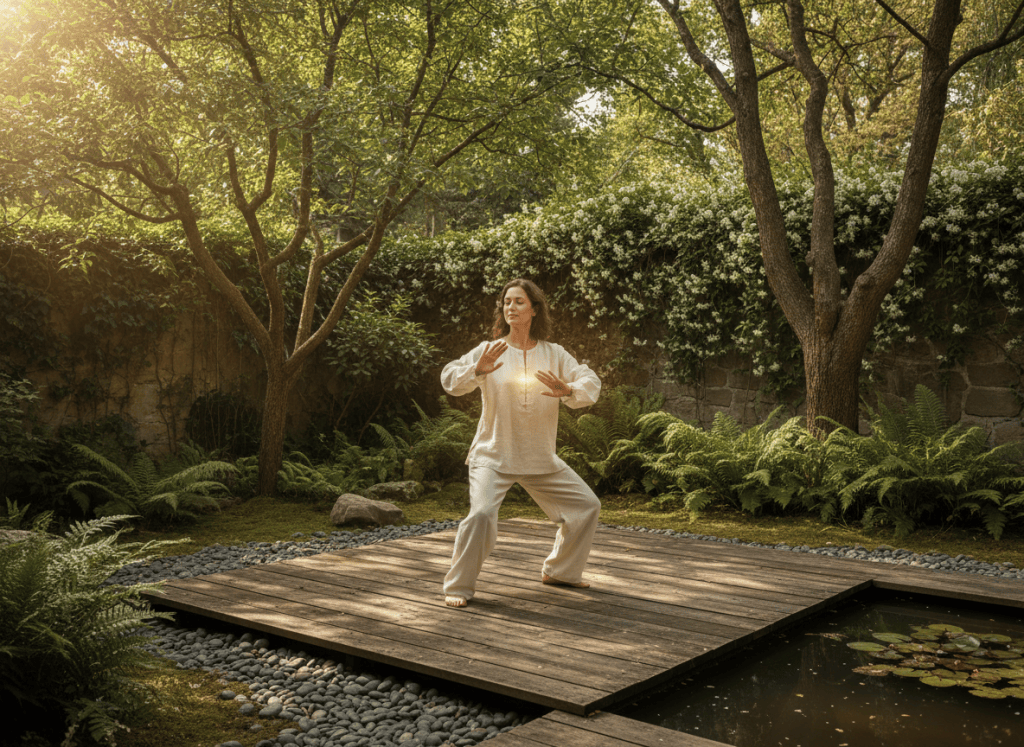
Tai Chi & Qigong
These gentle, flowing movement practices pair slow motion with breath awareness. Studies indicate they can reduce stress and improve mood while enhancing balance and physical function—making them especially accessible for older adults and those easing back into activity.
Guided Imagery
Guided imagery uses focused, sensory-rich visualization to promote relaxation. It shows promise for lowering stress and anxiety and is often used alongside other techniques because it requires little equipment and can be practiced almost anywhere.
At a glance, the practices with the firmest evidence base share a few qualities:
- Multiple, reasonably consistent clinical trials
- Measurable reductions in perceived stress and anxiety
- Strong safety records for most healthy adults
- Accessibility across ages, abilities, and settings
Emerging and Promising Approaches
Beyond the well-established practices, NCCIH tracks a range of approaches where early findings are encouraging but the evidence is still developing. Calling something “emerging” is not a dismissal—it is an honest acknowledgment that the research is younger, the studies smaller, or the results promising yet not fully replicated.
In clinical terms, an emerging approach typically has preliminary support—perhaps a handful of positive trials or strong physiological rationale—but lacks the volume and consistency of research needed for firm recommendations. Practices in this category may include focused breathwork techniques, biofeedback, certain forms of expressive or art-based practice, and specific relaxation protocols.
For practitioners, the takeaway is one of thoughtful openness. Emerging practices can still be valuable and safe—but they warrant clear framing with clients, ongoing attention to new evidence, and a commitment to revisiting choices as the science matures.
How to Select CIM-Aligned Techniques
Complementary and integrative medicine (CIM) works best when technique selection is deliberate rather than trend-driven. NCCIH is a reliable starting point because it distills the research into plain-language summaries, flags safety considerations, and notes where evidence is strong versus preliminary.
When choosing a mind–body technique to offer or recommend, a few guiding questions keep the decision grounded:
- Is it safe? Consider the client’s health history, medications, and any conditions that call for caution or medical clearance.
- Is it accessible? Match the practice to the client’s mobility, time, budget, and comfort level.
- Is it evidence-backed? Favor practices with consistent research, and be transparent when something is still emerging.
- Is it within scope? Offer what your training and credentials support, and refer out when a need falls outside your practice.
Scope of practice deserves special attention. Mind–body practices support well-being; they do not replace medical or mental-health care. Being clear about that boundary—both with yourself and with clients—protects everyone and builds lasting trust.
Integrating Mind–Body Practices into Wellness Sessions
Knowing the evidence is one thing; weaving it into real sessions is another. Thoughtful integration begins with the client in front of you—their goals, their capacity today, and the space you have together.
Session Design
Start small and build. A brief breathing exercise or a few minutes of guided imagery can open a session and set a calmer tone. Introduce one practice at a time so clients can notice what genuinely helps, and leave room to adjust as their comfort and confidence grow.
Client Communication
Explain the “why” in accessible terms, set realistic expectations, and normalize the learning curve—these practices are skills that deepen with repetition. Invite honest feedback and check in about how a technique feels, both during and between sessions.
Referral
Recognize when a client’s needs exceed your scope. Persistent distress, trauma responses, or medical concerns call for collaboration with qualified professionals. A well-timed referral is a mark of good care, not a shortcoming—and it keeps the client’s whole-person well-being at the center.
Why This Resource Matters for Wellness Practitioners
Evidence-informed practice is the difference between offering what sounds good and offering what has been shown to help. NCCIH gives practitioners a credible, non-commercial foundation for that work—research they can point to, and language they can share with clients.
The field moves quickly, and staying current is part of the job. Because NCCIH updates its summaries as new studies emerge, it is a practical way to keep your knowledge fresh without wading through dense journals alone. Returning to it periodically helps you refine what you offer over time.
Just as valuable is its role in client education. Sharing a trusted, plain-language source empowers clients to make informed choices, ask better questions, and take ownership of their wellness journey. That kind of grounded, transparent guidance is exactly what builds lasting trust—and stronger roots.
Resource
Where to Learn More
Explore NCCIH’s full, peer-reviewed guidance on mind–body approaches for stress. It is a trusted place to verify the evidence behind any technique before bringing it into your practice or daily routine.
nccih.nih.gov/health/stress
 Balanced Roots Wellness
Leave a comment